What Approval Standards Mean for Accessing High-Variance Spinning Games on Recently Launched Digital Platforms
Casey Powell · Oct 28, 2026

What Approval Standards Mean for Accessing High-Variance Spinning Games on Recently Launched Digital Platforms
Approval standards establish the framework that determines whether high-variance spinning games reach players on newly launched digital platforms, and these standards cover licensing, game certification, random number generator testing, and jurisdictional compliance checks that operators must complete before offering such titles. High-variance games, which feature larger but less frequent payouts, undergo the same scrutiny as other slots yet face additional layers of verification because their payout structures attract specific regulatory attention in multiple markets.
Regulatory Foundations for New Platforms
Operators launching digital platforms in 2026 must secure licenses from recognized authorities before integrating high-variance content, and these licenses typically require documented proof that all games meet technical standards set by independent testing labs. Data from regulatory filings shows that platforms entering the market after October 2026 face stricter timelines for submitting game files for certification, which directly affects how quickly high-variance titles become available to users in regulated regions.
Certification bodies examine volatility calculations, return-to-player percentages, and maximum win multipliers during the approval process, while newly launched platforms often coordinate with these bodies to expedite reviews without bypassing required audits. Observers note that platforms operating under multiple licenses, such as those combining European and North American approvals, maintain separate compliance teams to handle differing documentation requirements for the same high-variance game portfolio.
Certification Processes and Game Access
High-variance spinning games reach approved status only after laboratories verify their mathematical models against published standards, and this verification step prevents platforms from offering uncertified titles even when player demand exists. Research indicates that the average certification timeline for a new high-variance slot ranges from four to eight weeks depending on the complexity of bonus features and the volume of jurisdictions involved.
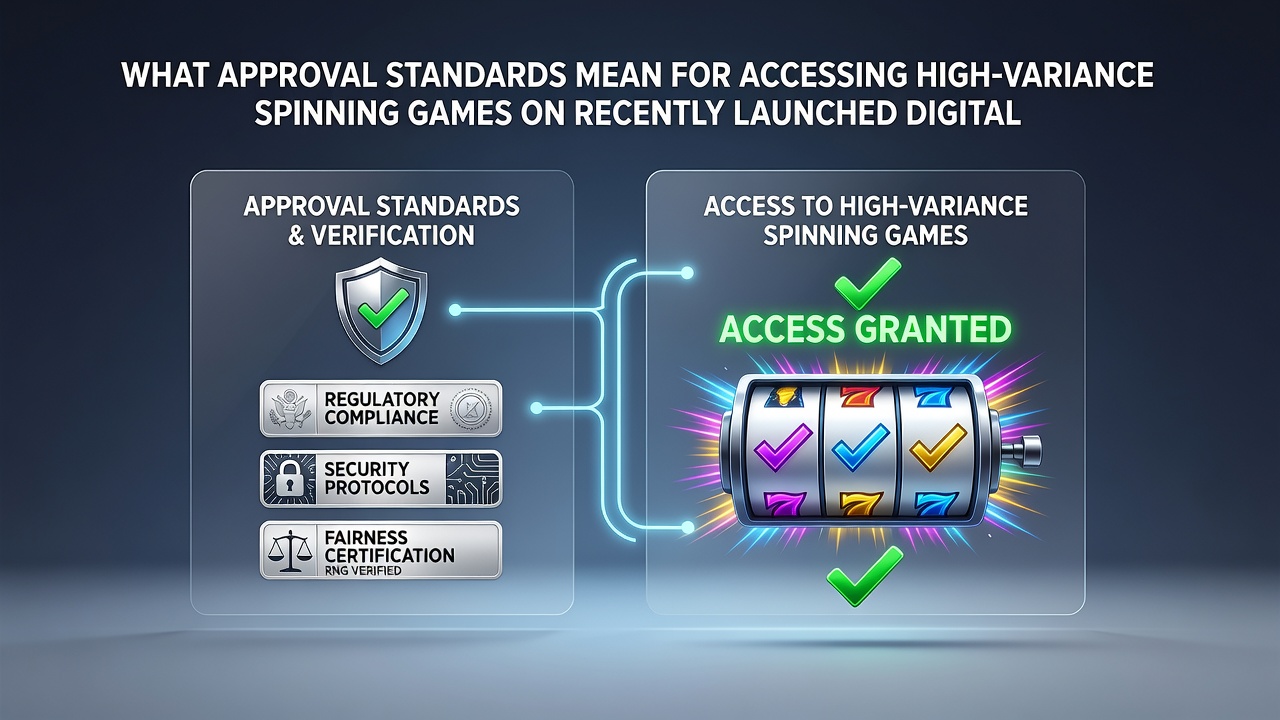
Platforms launched in late 2026 frequently publish their certification status on game lobbies, allowing players to confirm that each title carries valid seals from recognized testers before placing wagers. Those who study market entry patterns observe that operators who invest early in pre-certification consultations experience fewer delays when rolling out high-variance content across newly activated user bases.
Jurisdictional Variations in October 2026
Approval standards differ by region, which means a high-variance game cleared for one market may remain inaccessible on the same platform in another jurisdiction until local requirements are met. Canadian provincial regulators and Australian state authorities apply distinct volatility disclosure rules that affect how platforms present game information to users, while European national frameworks emphasize player protection measures tied directly to maximum stake limits on high-variance titles.
Industry reports compiled by trade associations reveal that platforms entering multiple markets simultaneously allocate dedicated compliance resources to track overlapping approval deadlines, and this coordination becomes especially relevant after October 2026 when several jurisdictions updated their submission portals to require digital signatures on all game approval documents.
Impact on Player Access and Platform Operations
Once approval standards are satisfied, players on recently launched platforms gain access to high-variance spinning games through verified accounts that incorporate age checks and responsible gaming tools mandated by the licensing authority. Platforms that complete these steps ahead of schedule often feature expanded game libraries sooner than competitors still navigating the final stages of certification.
External audits conducted by organizations such as the Gaming Laboratories International confirm that approved games maintain consistent performance metrics across different device types, which supports seamless access for users on mobile and desktop interfaces alike. Figures released by the European Gaming Association indicate that platforms meeting combined certification benchmarks report higher retention rates for high-variance game categories compared with those still pending final approvals.
Technical and Compliance Requirements
Random number generator integrity forms the core of approval standards for high-variance games, and testing protocols require platforms to demonstrate that outcome distributions align with published volatility parameters before any title goes live. Newly launched platforms integrate these requirements into their onboarding workflows so that game providers deliver only pre-approved content packages.
Operators maintain detailed records of all certification correspondence, which regulators may request during routine inspections or following player complaints about payout behavior. Those who've examined compliance patterns note that platforms with streamlined internal review processes adapt more readily to updated technical standards issued after October 2026.
Conclusion
Approval standards shape every stage of access to high-variance spinning games on recently launched digital platforms by enforcing licensing, certification, and technical verification that together determine when and where these games become available. Platforms that navigate these requirements efficiently expand their offerings while maintaining alignment with evolving regulatory expectations across different jurisdictions. Data collected through 2026 continues to show that structured compliance approaches correlate with broader game availability for end users.